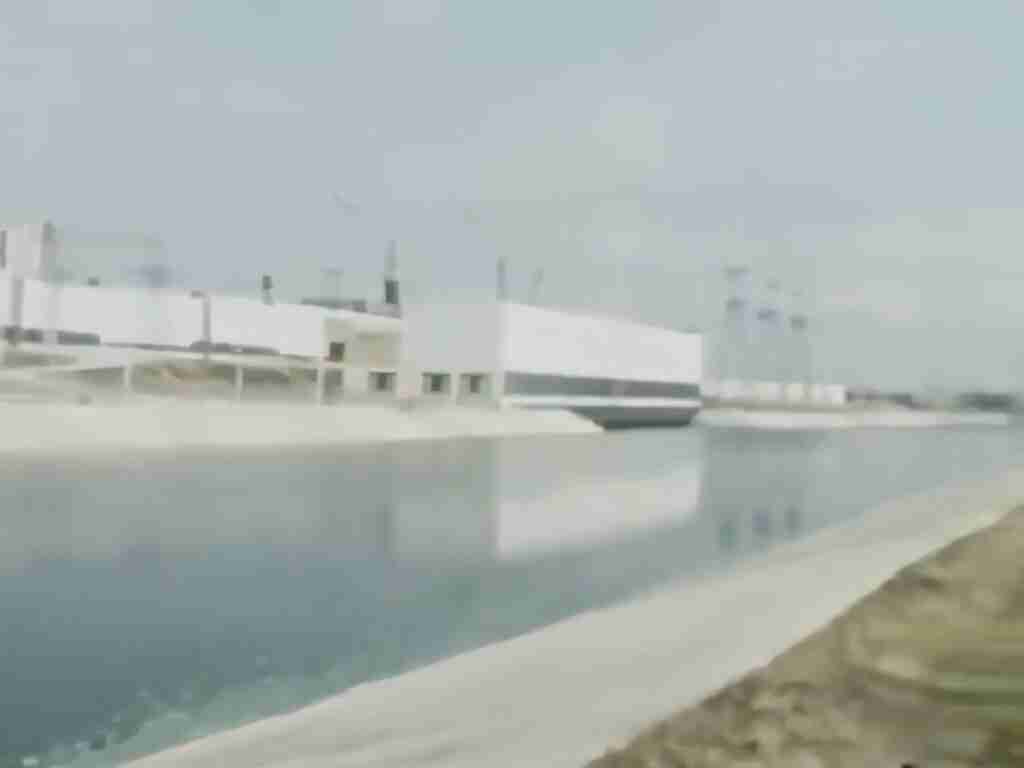
CHERNOBYL NUCLEAR POWER PLANT COOLING CANAL AND SERVICE BRIDGE – SOVIET ERA INFRASTRUCTURE
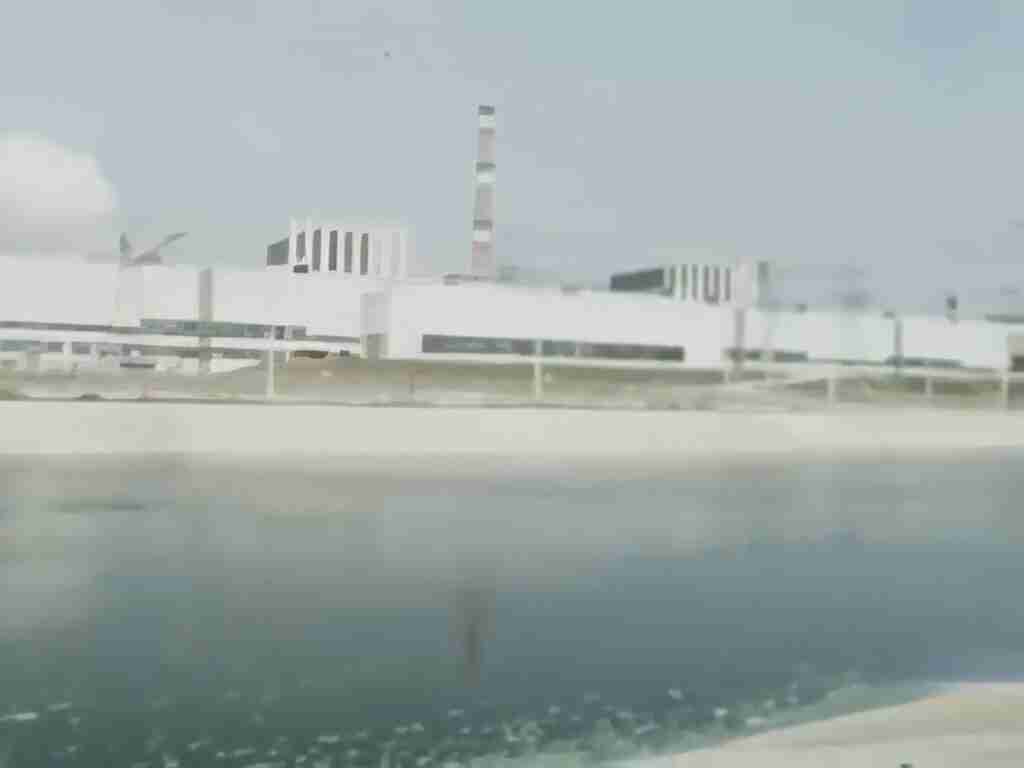
Wide shot of a concrete service bridge spanning an artificial cooling canal at the Chernobyl Nuclear Power Plant complex, Ukraine. The canal formed part of the plant’s hydrotechnical system, supplying and regulating water used for reactor cooling and heat exchange. Industrial buildings of the power station are visible in the background. Filmed in the Soviet period, this infrastructure supported routine operations at the nuclear facility prior to and following the 1986 disaster.
Cooling water canal supplying and regulating heat removal at the Chernobyl Nuclear Power Plant, part of the facility’s Soviet-era hydrotechnical infrastructure.
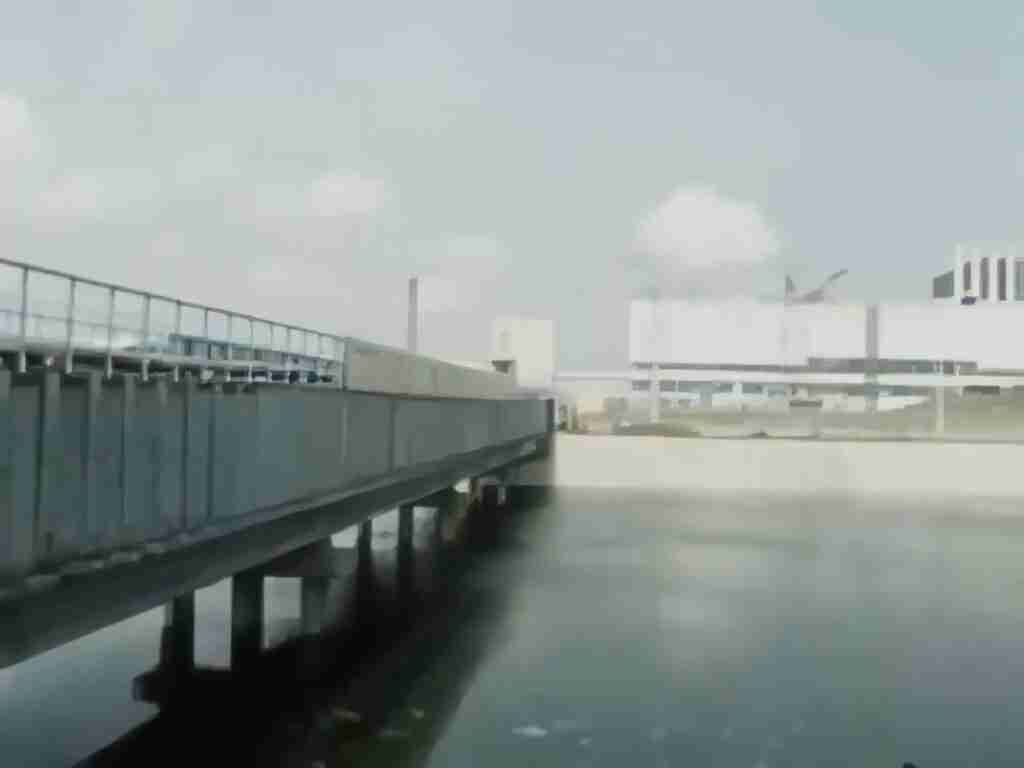
Hydrotechnical system, archival footage
Chernobyl, nuclear power plant, cooling canal, water canal, nuclear infrastructure, industrial water, reactor cooling, Soviet engineering, power station, nuclear facility, Ukraine, Pripyat, energy infrastructure, atomic energy,
Why it was built?
Watch Heat discharge system in action
SeparatePripyat River canalsreduced dependence on a single water source, a standard Soviet safety practice.
Stable water supply for NPP
The canal connected the plant to the Pripyat River and the Chernobyl cooling pond, ensuring a constant, controlled flow regardless of seasonal river changes.
The city of Pripyat itself was named after this river, and both became heavily contaminated after the 1986 disaster, with the river carrying radionuclides downstream.
Nuclear reactors generate enormous heat. The canal supplies and circulates large volumes of water to remove this heat safely.
- Reactor cooling
Nuclear reactors generate enormous heat. The canal supplied and circulated large volumes of water to remove this heat safely. - Heat discharge
Why it was built - Reactor cooling
Nuclear reactors generate enormous heat. The canal supplied and circulated large volumes of water to remove this heat safely. - Stable water supply
The canal connected the plant to the Pripyat River and the Chernobyl cooling pond, ensuring a constant, controlled flow regardless of seasonal river changes. - Operational access
Service bridges allowed maintenance crews, pipelines, and monitoring systems to cross the canal safely. - Stable water supply
The canal connected the plant to the Pripyat River and the Chernobyl cooling pond, ensuring a constant, controlled flow regardless of seasonal river changes. - Safety and redundancy
Separate canals reduced dependence on a single water source, a standard Soviet safety practice. - Operational access
Service bridges allowed maintenance crews, pipelines, and monitoring systems to cross the canal safely.