Tape E24 featuring the abandoned town of Pripyat after the Chernobyl disaster provides a haunting look. This is shown in Tape E24 Abandoned Pripyat – Chernobyl’s Ghost Town (Years After the Tragedy). It is perfect for dark dystopian films, horror documentaries, or historical retrospectives. Additionally, this Chernobyl disaster stock footage captures the unsettling beauty of a radioactive wasteland.

The video above is a compressed YouTube preview. TVDATA licenses the original broadcast-quality master of this footage — filmed in Pripyat on 11 October 1996, ten years after the Chernobyl disaster — mastered from a 10-bit Betacam SP source and available for HD or higher delivery worldwide. To license the full-resolution, cleared master, request a quote below.
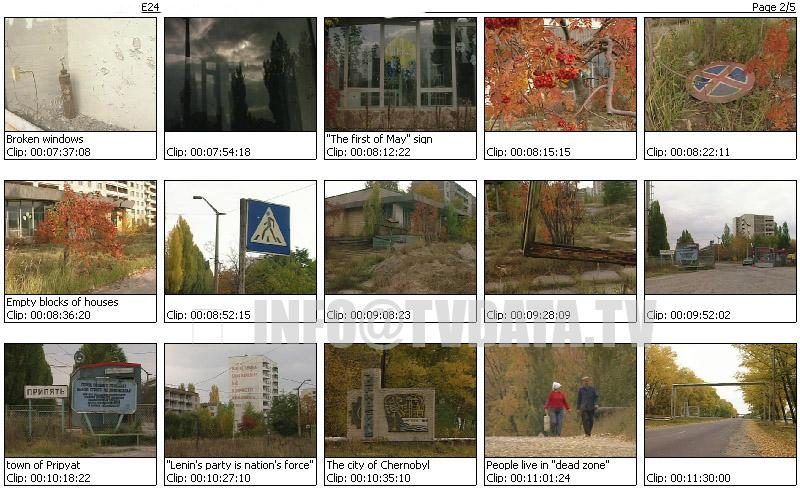
Tape E24: Abandoned Pripyat – Chernobyl’s Ghost Town (Years After the Tragedy)
This haunting footage captures the post-apocalyptic decay of Pripyat. It shows the abandoned city near the Chernobyl Nuclear Power Plant. The footage was filmed years after the 1986 disaster. Once a thriving Soviet town, Pripyat now stands frozen in time. It has crumbling buildings, overgrown streets, and eerie remnants of daily life. This resembles a Tape E24 Abandoned Pripyat – Chernobyl’s Ghost Town (Years After the Tragedy).
Pripyat: the Soviet atomic city that emptied in an afternoon
Founded in 1970, Pripyat was one of the Soviet Union’s purpose-built “atomic cities,” raised to house the workers of the Chernobyl Nuclear Power Plant. By 1986 it was home to almost 50,000 people, most of them under thirty, with schools, a hospital, a cinema and the amusement park that was due to open that May Day. It was designed as a showcase of Soviet modernity — and then, in a single afternoon, it was gone.
The Chernobyl Nuclear Power Plant and Reactor No. 4
The Chernobyl Nuclear Power Plant lay roughly three kilometres away. On 26 April 1986 a flawed safety test at Reactor No. 4 triggered the worst nuclear accident in history. TVDATA’s archive also holds rare 1986 helicopter footage of the destroyed reactor and a full documentary record of the catastrophe.
Inside the 30 km Exclusion Zone
The evacuation created a 30-kilometre Exclusion Zone that still exists today — one of the largest involuntary nature reserves on earth. This tape was filmed on 11 October 1996, ten years after the disaster, capturing the zone before mass “urbex” tourism and later reconstruction changed it. You can compare it with our later Chernobyl and Pripyat 4K archive footage.
Soviet architecture frozen in time
Apartment blocks, the Palace of Culture and the unfinished Hotel Polissya stand as a crumbling time capsule of Soviet design. For producers building a wider Cold War or USSR story, this footage sits alongside the rest of TVDATA’s Soviet stock footage and Cold War-era archive.
How nature reclaimed the zone
In the decades since, wildlife has returned in surprising numbers and the streets have slowly disappeared beneath trees and moss. The zone is now studied worldwide as a natural experiment in how a landscape recovers when people withdraw — a theme explored across our wider Chernobyl archive and nuclear history collection.
Key Visuals & Themes:
- Abandoned amusement park – The iconic Ferris wheel and bumper cars are rusted and silent. This adds to what has become Chernobyl’s Ghost Town (Years After the Tragedy).
- Decaying Soviet-era architecture – Apartments, schools, and hospitals reclaimed by nature.
- Radiation warning signs – Reminders of the invisible danger still lurking.
- Urban exploration (urbex) scenes – Explorers navigating the ghostly ruins.
- Time-capsule interiors – Dusty gas masks, children’s toys, and propaganda posters.
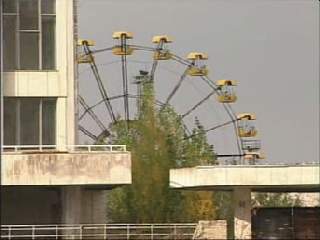
Abandoned amusement park – The iconic Ferris wheel and bumper cars, rusted and silent.
This chilling footage reveals Pripyat as a post-nuclear ghost town. Time stopped after the Chernobyl catastrophe. The city was once home to 50,000 people. It is now a toxic relic. The footage shows crumbling buildings, rusted machinery, and silent streets choked by nature’s slow reclamation. The air hums with an unsettling quiet, broken only by the wind whistling through broken windows. This footage perfectly illustrates Tape E24 Abandoned Pripyat – Chernobyl’s Ghost Town (Years After the Tragedy).
Post-apocalyptic landscape
This footage is ideal for documentaries, history channels, dystopian films, and eerie travel content. The visuals emphasize both the historical tragedy and the surreal beauty of decay. These qualities are captured in Tape E24 Abandoned Pripyat – Chernobyl’s Ghost Town (Years After the Tragedy).
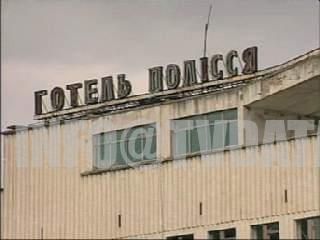
Hotel Polissya (or Polesie) was once the central hotel of Pripyat
It is a symbol of Soviet modernity in the thriving atomic city. After the 1986 Chernobyl disaster, the hotel was abandoned mid-construction. Since then, it was left to decay in the radioactive silence of the exclusion zone. Today, it stands as a crumbling time capsule of Soviet architecture. Its empty halls and skeletal structure echo the tragedy that froze Pripyat in time.
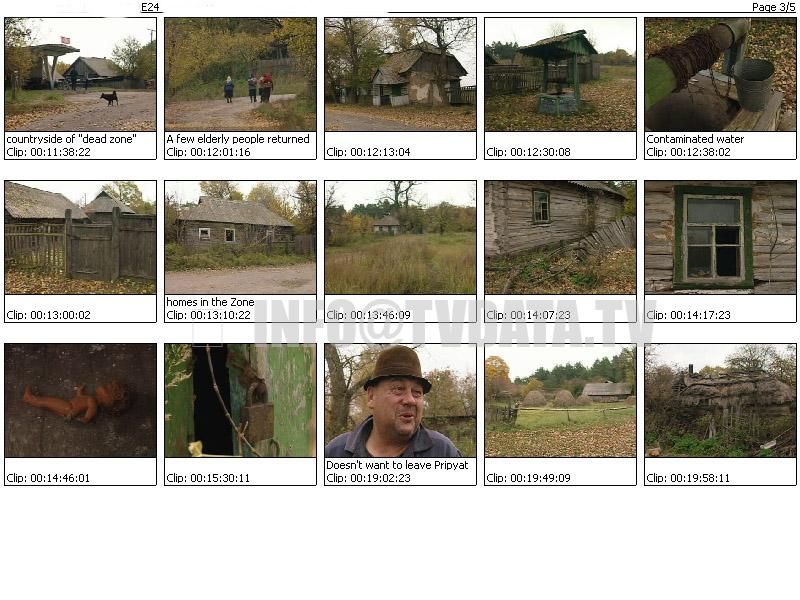
Technical Specifications & Restoration Potential
This rare footage was originally captured in 10-bit uncompressed format. It came from a Betacam SP source, preserving exceptional detail and dynamic range despite the passage of time. Our high-quality master allows for upscaling to HD (or higher) upon request. Therefore, it is ideal for modern productions requiring crisp archival visuals. Advanced restoration can further reduce noise and stabilize shots. This can breathe new life into these haunting images of Pripyat’s decay.