archive description
Documentary footage from “Academician Glushko and His Era”, a Russian four-part film dedicated to Soviet rocket engineer Valentin Petrovich Glushko and the history of NPO Energomash, one of the key institutions behind Soviet and Russian liquid-propellant rocket engine development.
The film combines archival footage, historical photographs, technical imagery, interviews, launch footage, Soviet industrial scenes, and later colour interviews to trace the development of rocket propulsion from early theoretical ideas and experimental work to the Cold War space race, strategic missile development, launch vehicle engines, and the institutional legacy of Energomash.
Short synopsis
Academician Glushko and His Era tells the story of Valentin Glushko, one of the central figures in Soviet rocket engine design. Through archive footage, interviews, photographs, documents, and technical film, the documentary follows the evolution of Soviet liquid-fuel rocket propulsion and the role of NPO Energomash in building the engines that powered major Soviet and Russian launch systems.
The film presents Glushko not only as an engineer, but as a figure shaped by the dramatic political, scientific, and military events of the twentieth century.
Extended synopsis
This documentary examines the life and legacy of Valentin Petrovich Glushko, a major Soviet scientist and designer in the field of liquid-propellant rocket engines. Created for the anniversary of NPO Energomash, the film connects Glushko’s biography with the wider development of Soviet rocket science.
The film opens with the imagery of rockets, engines, industrial facilities, and space-era symbolism. It then moves back into the early twentieth century, showing the intellectual atmosphere that shaped early rocket research. The documentary references the dream of space travel, early science fiction, European pioneers, and the emergence of practical rocket engineering.
The narrative follows the formation of Soviet rocket institutions, experimental laboratories, design groups, and the first serious attempts to create reliable liquid-fuel engines. It shows how engineering ambition became linked to state planning, military development, and national prestige.
The middle part of the film focuses on the institutional and technical evolution of Soviet rocket propulsion. Archive material shows factories, test stands, technical drawings, engine assemblies, launches, and period documents. Glushko’s role appears as part of a larger engineering culture built around precision, secrecy, discipline, and long-term state support.
The documentary also explores the human and political context of Soviet science. It shows the pressures placed on scientists and designers, the impact of war and repression, and the complicated relationship between personal achievement and the demands of the Soviet system.
Later sections move into the space age. The film covers the mature period of Soviet rocket engineering, including heavy launch systems, space missions, military-strategic technology, and the lasting importance of powerful liquid rocket engines. Interview material helps frame Glushko’s legacy through the voices of people connected to Soviet space history.
The film closes by presenting Glushko as a symbol of a generation of engineers who transformed early theoretical dreams into industrial reality. It positions NPO Energomash as a central institution in this history, linking the early experimental period with modern rocket engine production.
Timecoded editorial synopsis — not subtitles
00:00–05:00
Opening sequence with rocket and engine imagery. The film introduces the technological scale of Soviet rocket propulsion and the historical importance of NPO Energomash.
05:00–15:00
Early cultural and scientific background. The film refers to early dreams of spaceflight, European influence, science fiction imagery, and the intellectual environment from which rocket engineering emerged.
15:00–30:00
Early Soviet experimental work. Archive footage and documents show the first stages of liquid rocket research, laboratories, handwritten notes, and the foundations of Soviet propulsion science.
30:00–45:00
Biographical and institutional material. The film places Glushko within the Soviet scientific system, showing photographs, documents, aircraft and military imagery, and the growth of organised rocket research.
45:00–60:00
Industrial development and test infrastructure. The documentary shows engine hardware, production spaces, launch-related facilities, and the transition from experiment to large-scale engineering.
60:00–75:00
Later Soviet space and missile programmes. Colour footage and interviews connect Energomash and Glushko’s work to major rocket systems and space-age achievements.
75:00–90:00
Interview material and historical reflection. Sergei Khrushchev appears as one of the interview voices, commenting on the period and its political and technological background.
90:00–104:46
Final section with launch vehicles, space hardware, and further interview testimony. The film concludes by presenting Glushko’s legacy as part of the larger Soviet and Russian rocket engineering tradition.
The film itself was made much later, and Glushko died in 1989, so the main interview sections are with other commentators and witnesses, not with him directly. Britannica also confirms Glushko died on 10 January 1989.
Selected archive footage from “Academician Glushko and His Era” is available for licensing for documentary, editorial, educational, and research-based productions, subject to rights clearance and agreed usage terms.
archive keywords
Valentin Glushko, Academician Glushko, NPO Energomash, Soviet space programme, Russian space history, rocket engines, liquid-propellant rocket engine, Soviet rocket science, Soviet engineering, space race, Cold War technology, Soviet missiles, rocket propulsion, Soviet archive footage, Russian documentary, aerospace history, Baikonur, launch vehicle, space industry, Soviet scientists, Soviet industrial history, rocket test stand, Energomash anniversary, Soviet design bureau, Russian aerospace archive.
The film was made in 2003, well after his death, so it’s more of a “speech/newsreel.” Interviews with others follow.
FAQ — Academician Glushko and His Era Footage Licensing
What is this footage about?
This archive documentary footage focuses on Academician Valentin Glushko, one of the key figures in Soviet rocket engine development, and the history of NPO Energomash. The film covers Soviet rocket science, liquid-propellant engine development, industrial research, space technology, and the wider historical context of the Soviet space programme.
Does the film include footage of Valentin Glushko himself?
Yes. The film includes archival footage of Valentin Glushko speaking on camera. He appears in black-and-white footage at microphones, identified on screen as Chief Designer and Head of the Enterprise. This should be described as archival speech footage, rather than a full sit-down interview.
Is this suitable for documentaries?
Yes. This material is suitable for documentaries about Soviet space history, rocket engineering, the Cold War, science, technology, aerospace development, NPO Energomash, and the Soviet industrial system.
What type of footage is available?
The film includes documentary sequences, archive photographs, Soviet-era industrial footage, rocket and engine imagery, launch-related visuals, interviews with commentators, technical scenes, and historical material connected to Glushko and Energomash.
Can this footage be used in a space documentary?
Yes. The footage is highly relevant for productions about the Soviet space programme, rocket propulsion, liquid-fuel engines, Cold War technology, and the engineers behind early space exploration.
Can I license only a short extract?
Yes. Short clips may be licensed depending on the project, duration, territory, media type, and rights requirements.
Can the footage be licensed for YouTube documentaries?
Yes. The footage may be suitable for YouTube documentaries, educational channels, history channels, and aerospace-related productions, subject to licensing terms.
Can it be used for broadcast television?
Yes. The footage can be considered for broadcast, streaming, documentary, educational, and editorial use, depending on the requested rights package.
Is English description or translation available?
Yes. English editorial descriptions, clip summaries, keywords, and translated context can be provided. English subtitles or translated transcripts may also be prepared if a Russian transcript or timecoded source is available.
Does the footage include interviews?
Yes. The documentary includes interview-style material with later commentators and witnesses. It also includes archival footage of Valentin Glushko speaking, but this should not be described as a full interview with him unless the exact segment confirms that format.
What are the main licensing keywords?
Valentin Glushko, NPO Energomash, Soviet space programme, Russian space history, rocket engines, liquid-propellant rocket engine, Cold War technology, Soviet science, aerospace engineering, Soviet archive footage, rocket propulsion, Soviet missiles, space race, rocket test stand, Soviet industrial history.
What information do you need from buyers?
Please provide the project title, production company, intended use, clip duration, territory, media type, licence period, and whether the footage is required for broadcast, streaming, cinema, online, educational, or internal use.
Can the footage be supplied with a screener?
Yes. A watermarked screener can be supplied for review. Final master delivery is subject to licensing confirmation and agreed usage terms.
Is rights clearance required?
Yes. Rights clearance should be confirmed before publication or broadcast. Licensing terms depend on the requested usage, territory, duration, and source-rights status.

Customizable Stock Video Footage | HD & 4K | TVDATA
At TVDATA Stock Footage, we redefine the concept of High-Quality Video Clips Unlike traditional libraries offering pre-cut Royalty-Free Stock Videos clips, we put you in control. You select the exact length and timing, ensuring the perfect fit for your project: Film, Television, Commercial or Advertisement. Our unique approach provides you with the ultimate creative freedom…
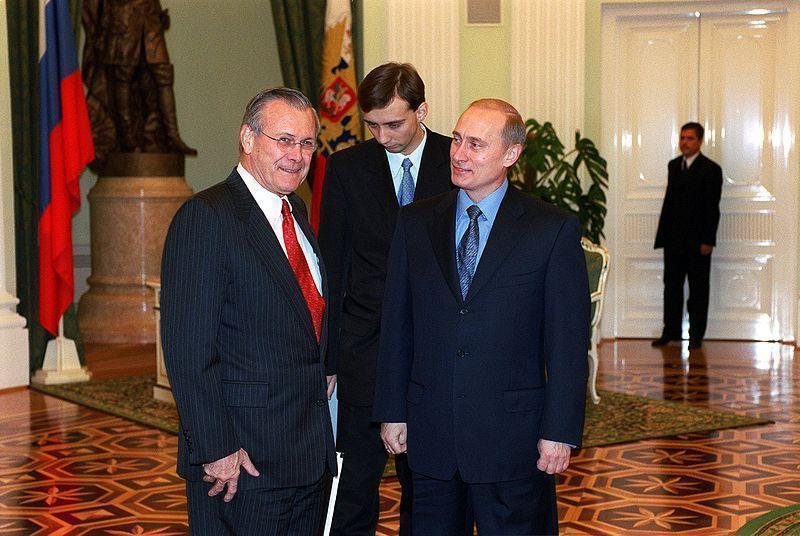
Donald Rumsfeld Moscow 2001 Visit | Rare Archival Stock Footage
This rare and exclusive footage captures U.S. Secretary of Defense Donald Rumsfeld landing at Vnukovo Airport in Moscow, a significant event in U.S.-Russia relations. 2001 historical Russian stock footage. Worldwide licensing info@tvdata.tv
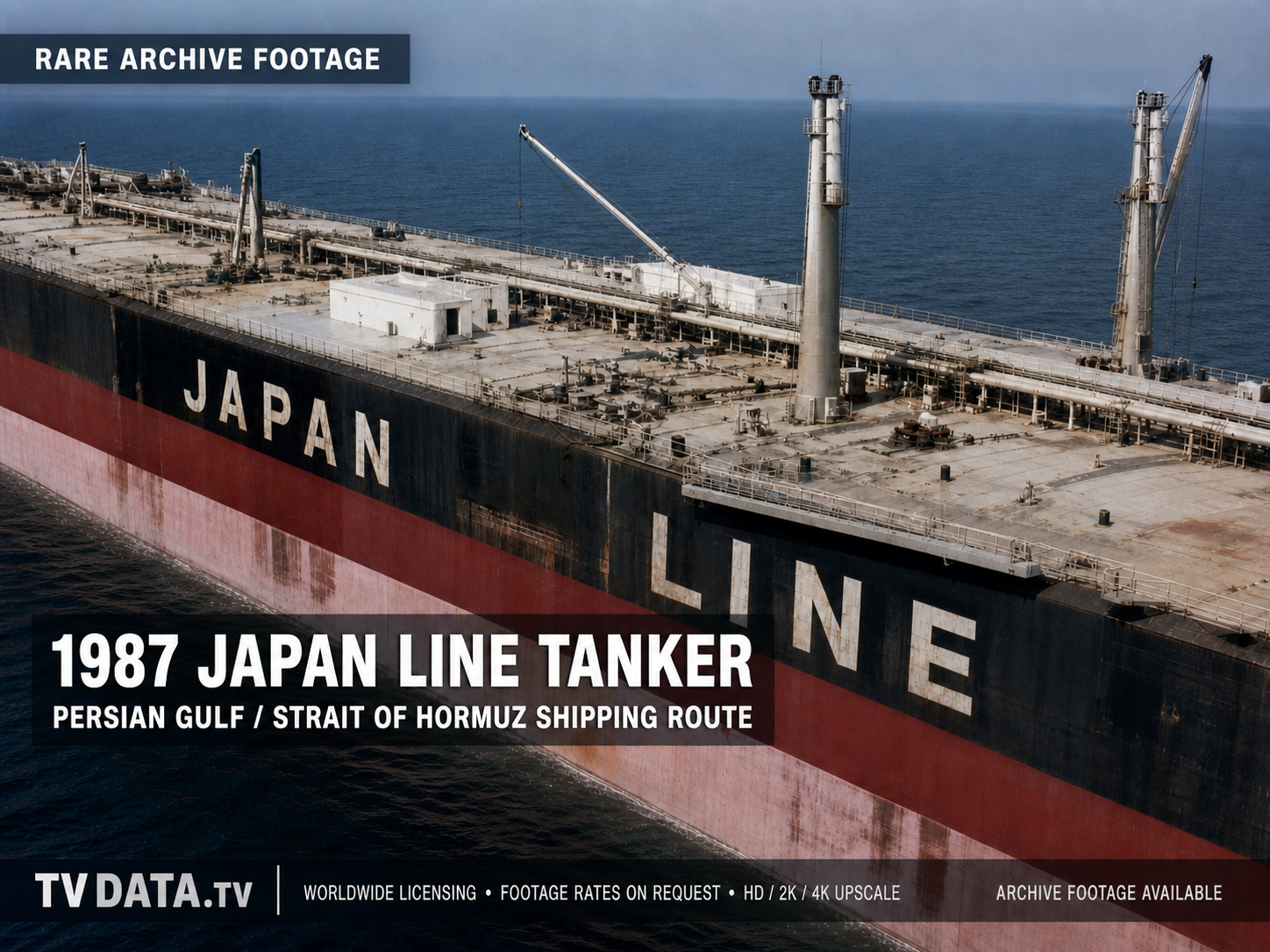
1987 Tanker War & Strait of Hormuz | Merchant Vessel Archive Footage
This footage is historical archive material. It is used as context for stories about oil routes, maritime risk, and Japan’s dependence on Middle Eastern energy.
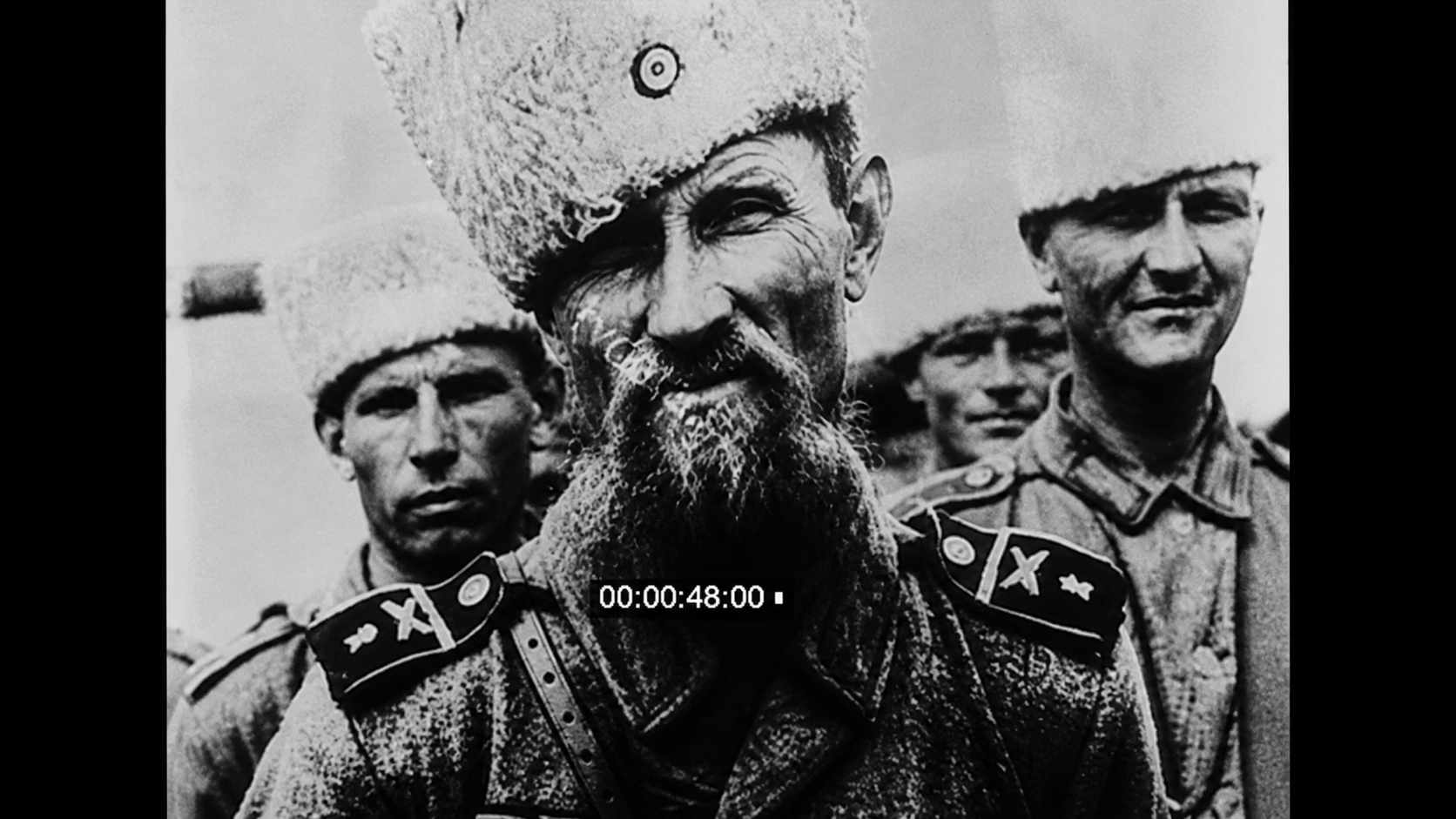
Rare Cossack History Archive Film (1917–1945) | Slavic Heritage
Rare black-and-white archival footage of Cossack military culture, migration, and East Slavic identity from 1917–1945. Available for editorial licensing from TVDATA.
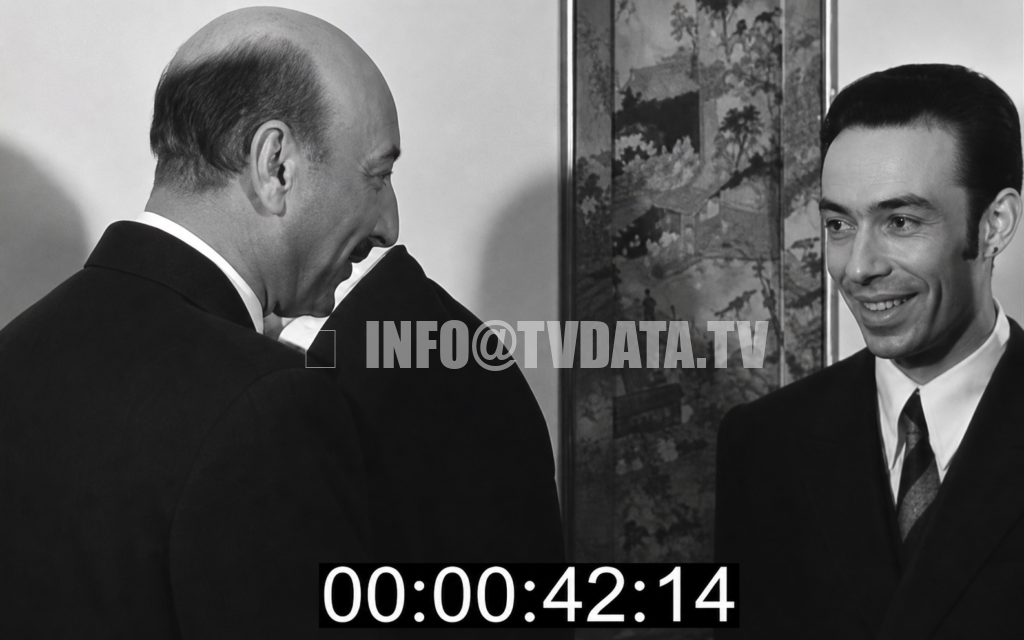
Brezhnev & King of Afghanistan 1971 Meeting | Kremlin Archive Footage
Unique 1971 archival footage of Leonid Brezhnev meeting King Mohammed Zahir Shah in the Kremlin. High-resolution Soviet-era diplomatic history for license.